
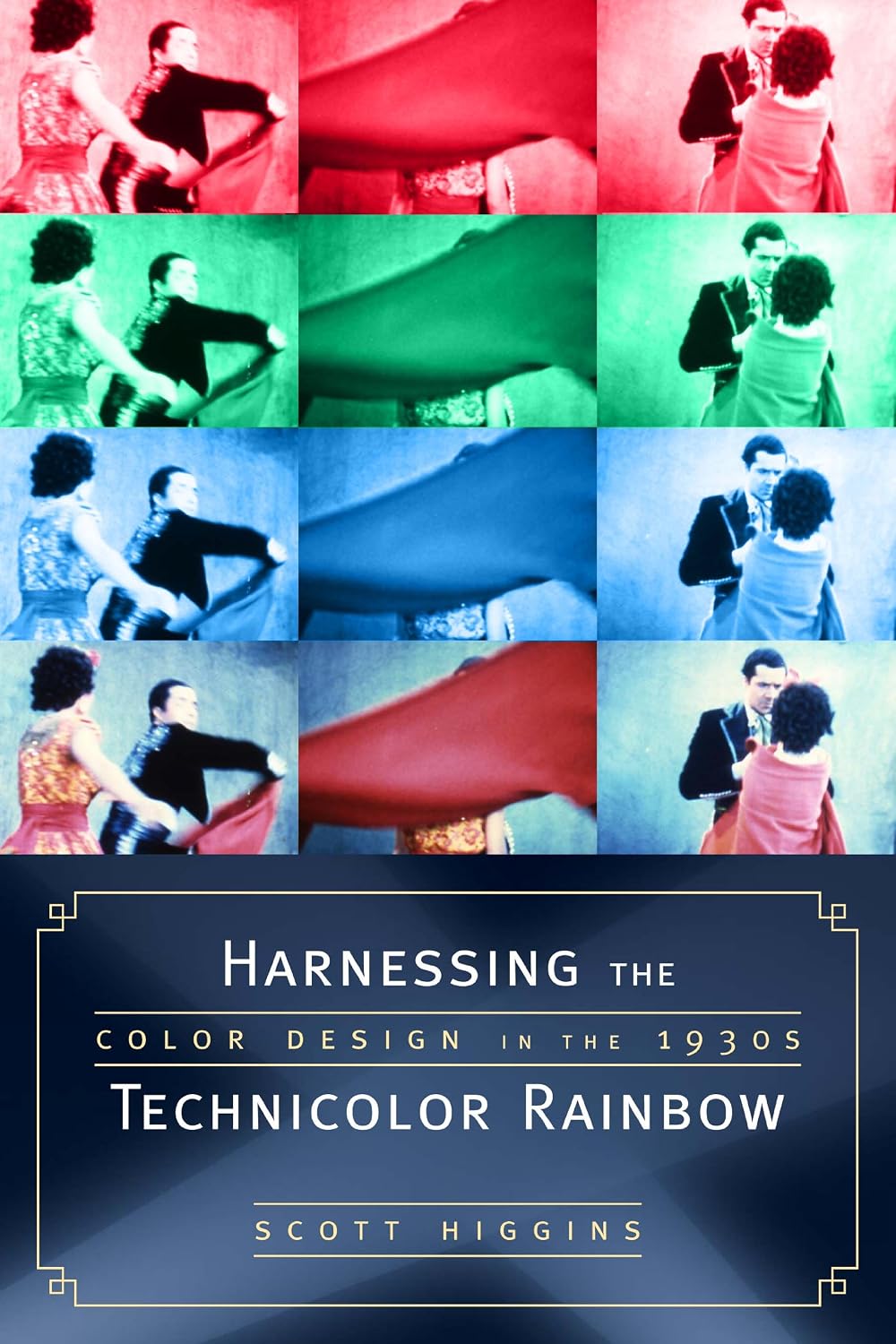
Harnessing the Technicolor Rainbow: Color Design in the 1930s
Product details
| Management number | 233571099 | Release Date | 2026/06/27 | List Price | US$10.46 | Model Number | 233571099 | ||
|---|---|---|---|---|---|---|---|---|---|
| Category | |||||||||
Like Dorothy waking up over the rainbow in the Land of Oz, Hollywood discovered a vivid new world of color in the 1930s. The introduction of three-color Technicolor technology in 1932 gave filmmakers a powerful tool with which to guide viewers' attention, punctuate turning points, and express emotional subtext. Although many producers and filmmakers initially resisted the use of color, Technicolor designers, led by the legendary Natalie Kalmus, developed an aesthetic that complemented the classical Hollywood filmmaking style while still offering innovative novelty. By the end of the 1930s, color in film was thoroughly harnessed to narrative, and it became elegantly expressive without threatening the coherence of the film's imaginary world. Harnessing the Technicolor Rainbow is the first scholarly history of Technicolor aesthetics and technology, as well as a thoroughgoing analysis of how color works in film. Scott Higgins draws on extensive primary research and close analysis of well-known movies, including Becky Sharp, A Star Is Born, Adventures of Robin Hood, and Gone with the Wind, to show how the Technicolor films of the 1930s forged enduring conventions for handling color in popular cinema. He argues that filmmakers and designers rapidly worked through a series of stylistic modes based on the demonstration, restraint, and integration of color—and shows how the color conventions developed in the 1930s have continued to influence filmmaking to the present day. Higgins also formulates a new vocabulary and a method of analysis for capturing the often-elusive functions and effects of color that, in turn, open new avenues for the study of film form and lay a foundation for new work on color in cinema. Read more
| ISBN10 | 0292716281 |
|---|---|
| ISBN13 | 978-0292716285 |
| Language | English |
| Publisher | University of Texas Press |
| Dimensions | 6 x 0.75 x 8.75 inches |
| Item Weight | 15.2 ounces |
| Print length | 312 pages |
| Publication date | November 1, 2007 |
Bestseller ranking
History & Criticism



Customers who viewed this product also viewed
Halogen Bulbs



Correction of product information
If you notice any omissions or errors in the product information on this page, please use the correction request form below.
Correction Request Form