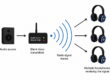


The point of a silent disco is straightforward: guests enjoy music at a full, satisfying volume through wireless headphones, while the venue around them stays relatively quiet. That simple idea unlocks a surprising number of practical benefits.
Silent discos work well at venues with noise restrictions, allow guests to switch between multiple music channels, and give everyone individual control over their listening volume. They’re a practical solution for weddings and family events where tastes differ, and they make outdoor or late-night events far easier to manage.
The core idea: what is the point of a silent disco?
A silent disco solves a problem that organisers of amplified events face regularly: how do you give guests a genuinely energetic music experience when the venue, location or time of night places limits on how loud that music can be?
The answer is to move the sound closer to the listener. Guests wear wireless headphones and hear music at a full, immersive volume, while the venue itself stays relatively quiet. The dance floor can be just as lively as any conventional event — people are dancing, singing along and having a great time — but the noise level in the room remains low enough to satisfy even strict venue restrictions.

When you consider what is the point of a silent disco from an organiser’s perspective, three benefits stand out immediately:
- Noise restrictions and curfews are no longer a barrier. Outdoor venues, listed buildings and late-night events that would normally rule out amplified music become viable options.
- Every guest controls their own volume. Rather than one fixed level being broadcast across the room, individuals can turn their headphones up or down to suit themselves.
- The energy of a dance floor is preserved. Guests are fully immersed in the music through their headphones, so the atmosphere feels as engaging as a traditional event — just without the noise spilling beyond the dance floor.
If you’re planning an event and noise is a concern, exploring silent disco hire is a practical starting point.
How a silent disco works: headphones, channels and DJs
Each guest is given a pair of wireless headphones that pick up a radio signal broadcast by a transmitter connected to a DJ’s equipment or music source. Because each transmitter broadcasts on its own frequency, multiple transmitters can run at the same time — each carrying a completely different music feed.
Most commercial silent disco hire systems support three separate audio channels. Guests switch between them using a button on the headset, and a coloured LED indicator shows which channel they’re currently listening to. Look across a silent disco dance floor and you’ll see a mix of coloured lights moving around as people swap between their preferred sounds.
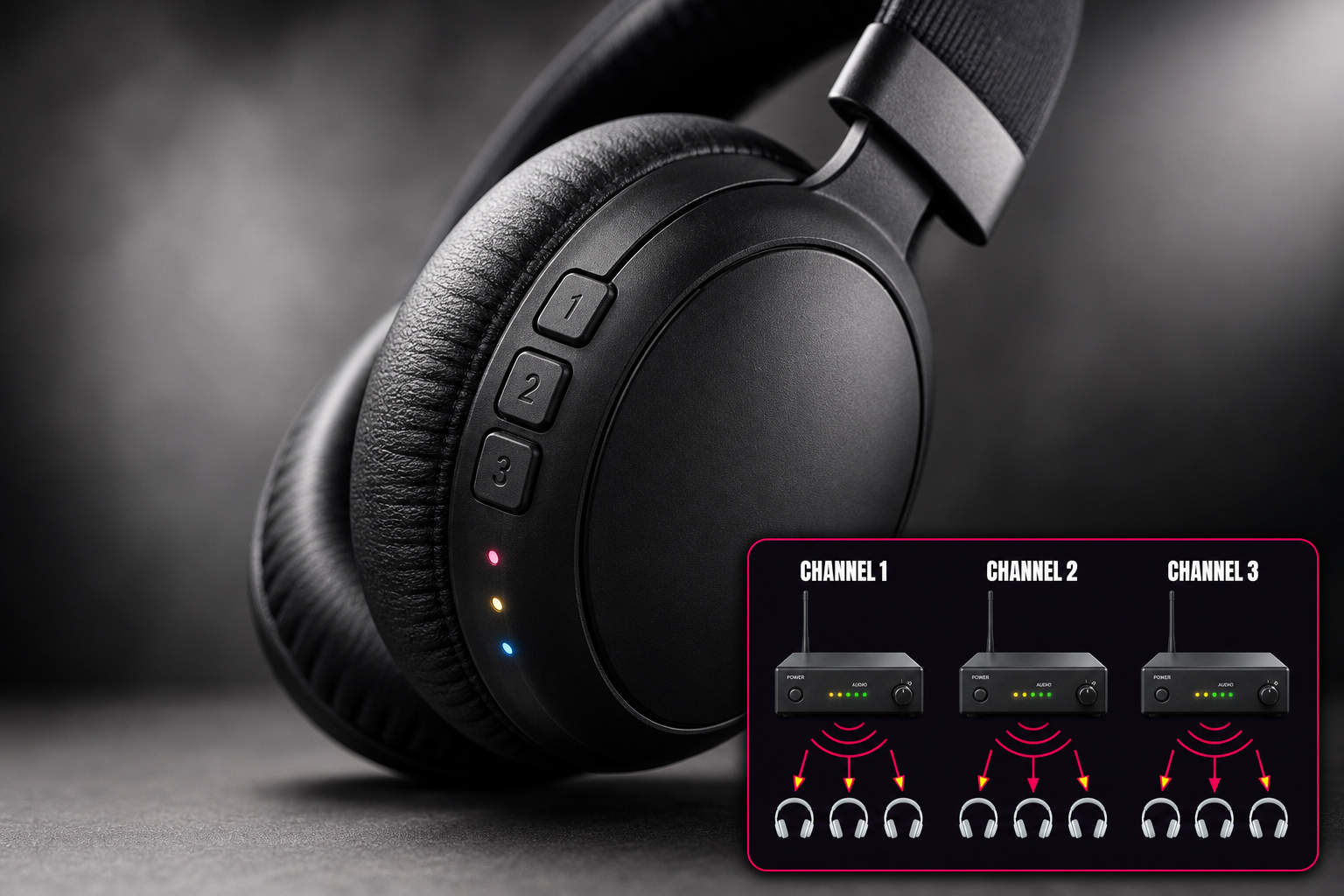
In practice, three DJs or three distinct playlists can run simultaneously, each on its own channel:
- Channel 1 might carry a live DJ playing current chart music
- Channel 2 could broadcast a playlist of 1980s classics
- Channel 3 might feature dance or disco tracks
A guest who isn’t enjoying what’s on one channel simply presses a button and switches to another. The choice is immediate and personal — no waiting for the DJ to change direction.
For details on equipment and packages, our silent disco hire page gives a good overview of what’s available.
Why silent discos are more flexible than traditional amplified events
A traditional amplified event gives everyone the same experience: one DJ, one volume, one set of songs. That works well in many situations, but it’s a fairly rigid format. A silent disco loosens those constraints considerably.
The most obvious difference is choice. With a multi-channel setup, two or three DJs can play completely different music at the same time. Guests aren’t locked into whatever the DJ decides to play next — they choose the channel that suits them and switch freely throughout the evening.
There’s also the matter of volume. A conventional event broadcasts sound to the entire room at a fixed level. With a silent disco, every guest controls their own headphone volume independently. People who find loud music uncomfortable can turn it down without affecting anyone around them, while those who want full immersion can turn it up.
Many wedding venues — particularly older or listed buildings — are also installing sound limiters due to concerns about noise affecting nearby residents. A silent disco lets the music stay energetic inside the headphones without generating the same level of ambient noise, which makes it a practical fit for spaces where a traditional amplified event would struggle.
Noise limits, sound limiters and how silent discos help
A sound limiter is a device installed by a venue to automatically cut power to the PA system if the music exceeds a set decibel level. They’re common in older properties, listed buildings and venues where noise affecting nearby residents is a concern.
Settings vary considerably depending on the venue and its licensing conditions — a realistic range for many UK event spaces is roughly 85–95 dB(A), with more noise-sensitive locations sometimes set lower. At those more restrictive levels, amplified music can struggle to find real energy on a dance floor.
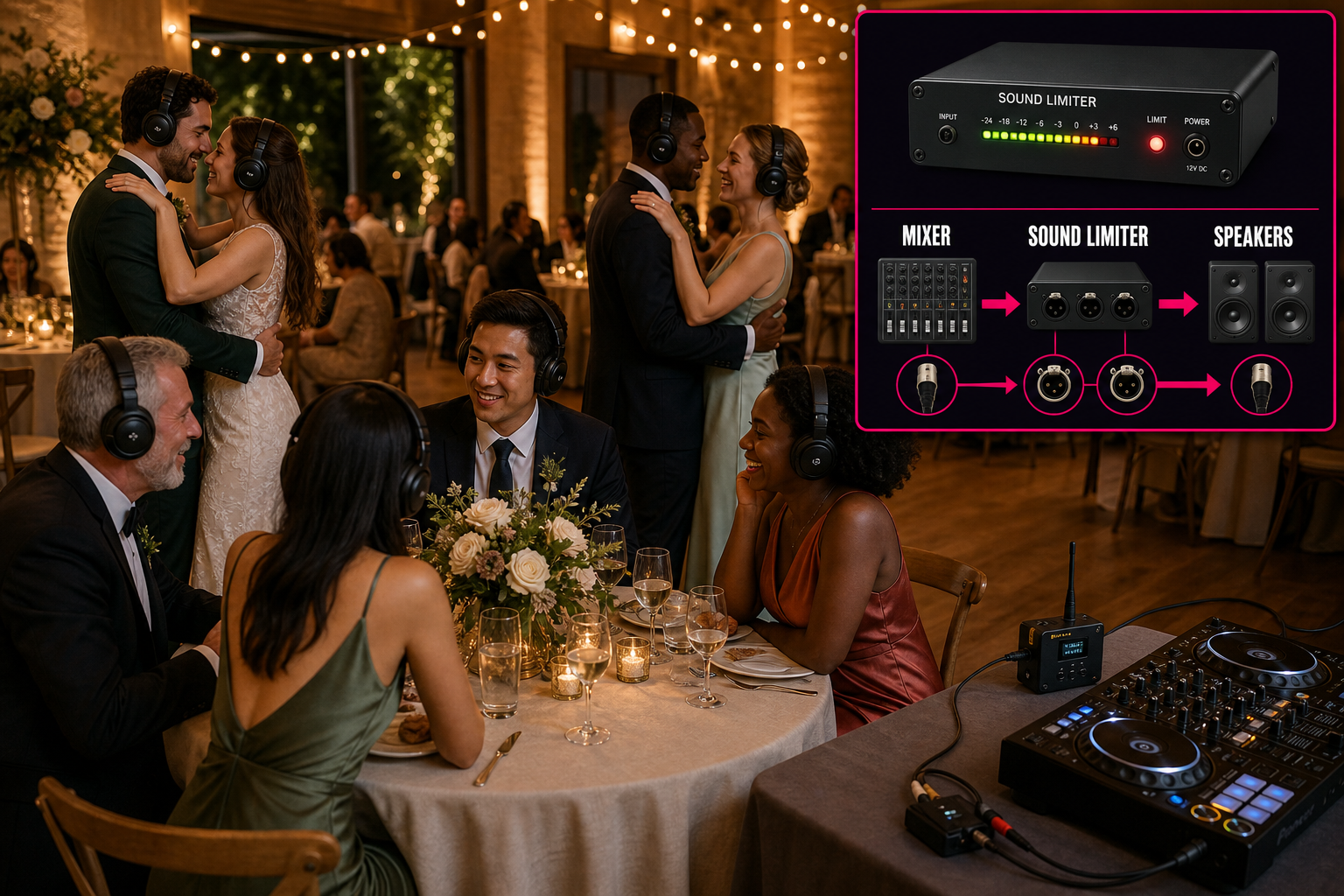
A silent disco sidesteps this problem neatly. The ambient noise in the room stays low — well within whatever limit the venue has set — while guests hear the music at a genuinely enjoyable level through their headphones. The same principle applies to outdoor events and late-night gatherings where amplified sound isn’t permitted at all.
For venue managers and event planners working within these constraints, silent disco hire is worth exploring as a practical solution.
Who benefits most from a silent disco?
Silent discos suit a wide range of events, but they’re particularly effective in a few specific situations.
Weddings
Couples marrying at venues with noise restrictions can keep the reception going with full energy inside the headphones, without risking a cut from the sound limiter mid-evening.
Family events and mixed-age crowds
This format works brilliantly when audiences range from children to guests in their sixties. Three channels can carry completely different music — current chart tracks for younger guests, eighties favourites, and disco classics for older guests — without anyone having to compromise or leave the dance floor.
Outdoor and late-night events
Gardens, parks and open-air venues often prohibit amplified sound after a certain hour. A silent disco removes that barrier entirely. When neighbours are a concern, keeping ambient venue noise low also means the event can run later without complaints.
If you’re not sure which format suits your event best, contact us and we can talk through the options.
Practical setup: what organisers need to plan for
Good silent disco logistics make the difference between a seamless evening and a frustrating one. Here’s what to consider:
- Headphone count and spares. Order slightly more units than your guest count and keep charged spares available for battery failures mid-event.
- Transmitters. One per channel, or a multi-channel transmitter if your setup supports it.
- Staffing. Having staff on hand to distribute headphones, explain channel switching and collect units at the end makes a noticeable difference to how smoothly guests settle in.
- Hygiene. Sanitise headphones between uses. Disposable ear covers are a practical option for larger events.
- Quiet space and backup. Have a technical contingency plan, and designate a quieter area for guests who’d prefer not to wear headphones.
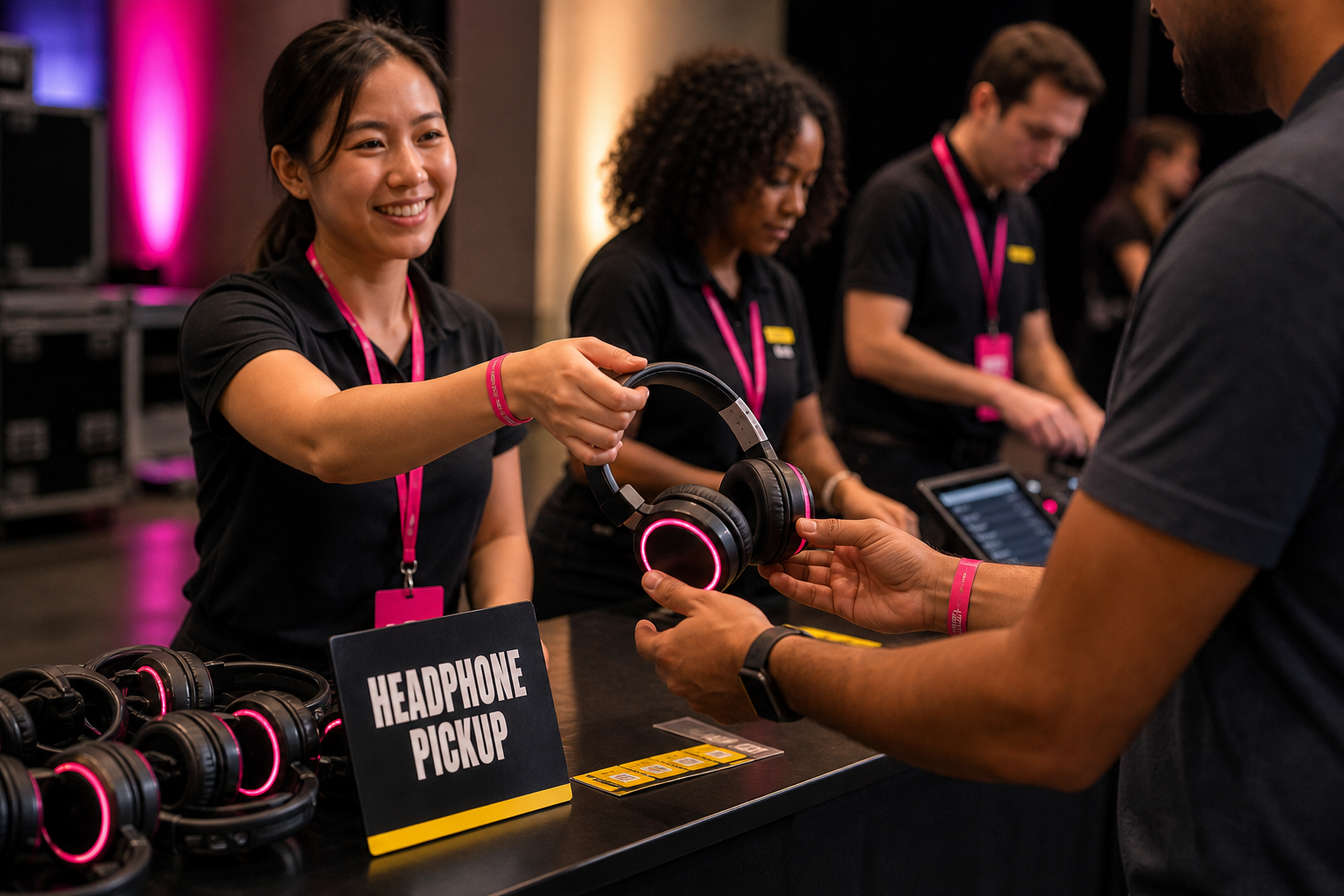
Most equipment packages will cover the core kit — it’s worth confirming what staffing support is included when you book.
Common questions about silent discos
Is a silent disco loud?
Inside the headphones, yes — guests can set the volume to a level that feels genuinely immersive. In the venue itself, the ambient noise stays low, which is the whole point of a silent disco.
How many channels can I have?
Most commercial hire systems offer three channels, which is enough to run three distinct DJs or playlists simultaneously. The exact number depends on the equipment supplied, so it’s worth confirming when you enquire.
Is the sound quality good?
It depends on the equipment. Better headphones and transmitters produce noticeably cleaner audio, so check what’s included in any hire package before you book.
Can guests dance together if they’re on different channels?
Absolutely. Guests can happily share a dance floor while listening to completely different music — the shared energy holds up without everyone needing to be on the same track.
Are silent discos expensive?
Costs vary depending on headphone numbers, channel count, duration and whether staffing is included. The best way to get an accurate figure is to get a quote based on your specific event.
Ready to book a silent disco?
The point of a silent disco is simple: it lets guests enjoy music at a volume that works for them, while keeping the venue quiet enough to satisfy noise restrictions and neighbours. With multiple channels and individual volume control, it’s a genuinely flexible format that suits weddings, family events, outdoor venues and late-night gatherings alike.
If you’re ready to explore options, you can hire a silent disco or contact us to talk through what would work best for your event.